
In this article (5 sections)1,168 words
For founders and technologists in the healthcare space, it’s easy to assume we know exactly what clinicians need. We often focus on speeding up chair-side time, automating insurance claims, maximizing coding efficiency, or ensuring procedural safety.
But an in-depth discussion with a certified pediatric dental specialist from Osaka Dental University (大阪歯科大学 小児歯科) completely reshaped my perspective. Through our conversation, we dug deep into his daily workflow and uncovered the real challenges in clinical practice—and while they were close to what I had expected, there was a subtle but crucial gap.
The Empathy of Efficiency
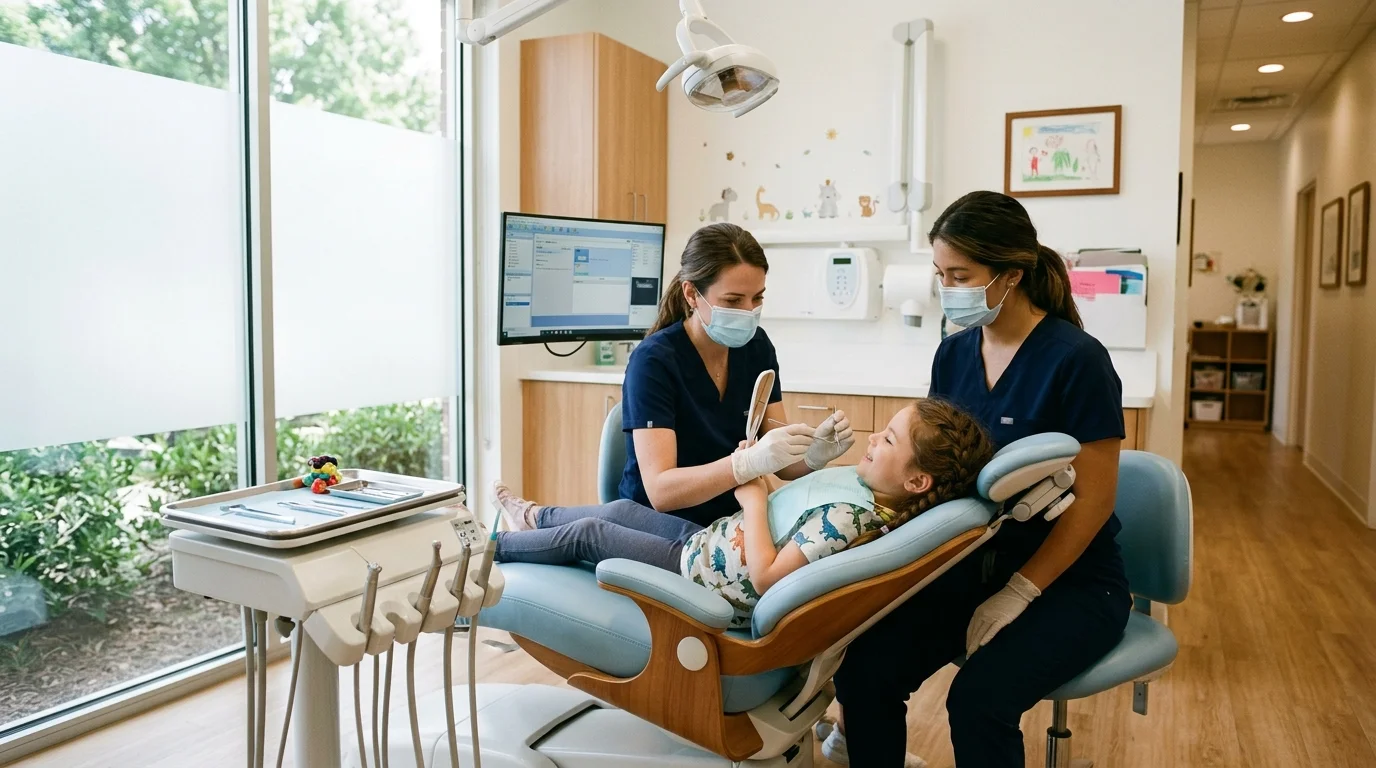
Dr. Satoru operates in a high-pressure environment without dedicated pediatric dental assistants. He personally handles every assessment, treatment strategy, and communication with parents.
When discussing how to manage childhood dental fear, he shared a foundational philosophy: The goal of managing fear is not merely to extract ‘cooperation,’ but to minimize the overall physical and psychological burden on the child.
For non-invasive procedures, this means operant conditioning—showing the child the instruments, taking equivalent items home, and demonstrating on stuffed animals. But for invasive procedures, the strategy flips. He keeps scary instruments completely out of sight and focuses only on practicing prerequisites (like lying back and keeping the mouth open). He noted that over-preparation can sometimes amplify anxiety, and knowing when to prioritize swift, efficient care over prolonged desensitization is an intuition that only comes from deep, frontline experience. Dr. Satoru said.
Reading this left me with profound respect. It also begged a question: Where can technology actually help a clinician navigating this level of emotional and clinical complexity?
The True Challenge: Interpreting the Patient Record
When I asked Dr. Satoru what problems technology could solve for him, his answer surprised me.
He pointed out that for an experienced specialist, making a diagnosis or formulating a treatment plan is almost a given. It is not the hardest part of the job. The truly difficult part is obtaining and interpreting the raw information correctly.
“We observe the patient and the parents. We take the history. We perform clinical examinations. We try to understand the wishes and expectations of both… All of these processes are essentially about reading and interpreting information.”
The risk for younger or less experienced dentists isn’t just making the wrong clinical decision; it’s failing to gather and accurately interpret this nuanced behavioral and clinical data in the first place. If a clinician misses a critical observation, the entire treatment strategy can fall apart.
Observing the Whole Patient
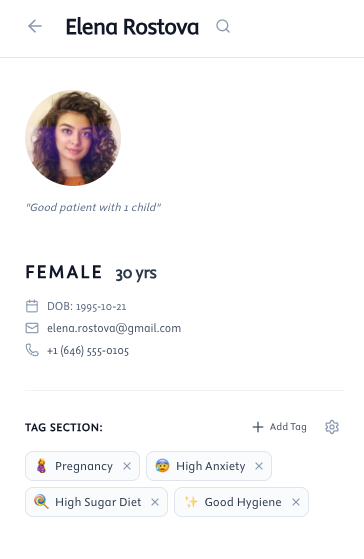
A clinical record is never just tooth numbers or isolated radiographs. As Dr. Satoru highlighted, true observation begins with the human being in the chair. Capturing lifestyle factors, hygiene habits, and behavioral tendencies is just as crucial to treatment success as any mechanical finding.
From the perspective of a founder and technologist, I know this complexity goes far beyond clinical intuition—it’s also a massive logistical hurdle. A typical clinic’s workflow is heavily influenced by divided organizational roles and strict compliance rules, making the actual collection of this raw data incredibly fragmented.
If we overview the reality of a modern dental practice, data is scattered everywhere:
- History Notes: Jotted down on a piece of paper or an iPad.
- Intraoral Photos: Shot and pushed to a local NAS device or a separate cloud drive.
- Radiographs: Trapped on a completely different machine, locked behind proprietary X-ray brand software.
Before a clinician can even begin the difficult work of interpreting a patient’s story, they are forced to navigate this digital maze of multiple, un-unified data types just to centralize the record in one place.
Solving this collection gap—bringing these fragmented formats together onto a single, cohesive canvas—is precisely what Solution Creator Studio is designed to do. Yet as our conversation continued, Dr. Satoru pointed toward a purpose that went far beyond just saving chair-side time.
The Vision: Simulated Patients and Education
Rather than just wanting a tool to speed up his daily workflow, We imagine technology to address a much broader challenge: Bridging the Experience Gap through Clinical Intuition Training.
This resonated deeply with me. Having worked in the dental industry since 2016, I’ve seen firsthand how difficult training can be—not just for new dentists, but for hygienists and office managers as well. Even today, over 70% of clinics still rely on their own internally created training documents. While having internal manuals isn’t a bad thing, static documents make it nearly impossible to actually bridge that experience gap. You simply cannot teach clinical intuition from a piece of paper.
To solve this, Dr. Satoru envisions high-quality simulated patients and clinical scenarios where younger dentists can repeatedly practice the hardest skill in dentistry: observing, gathering information, and deciding what additional information they need.
Yet building these educational simulations faces a two-fold bottleneck. First, rich clinical materials—intraoral photographs, radiographs, and video recordings of patient behavior—remain locked away in fragmented systems. Second, there is the broader challenge of modularization: figuring out how to leverage modern technology and AI to package this raw, unstructured clinical data into standardized training modules that can scale across the industry.
Before Full Simulations Arrive: What We Can Do Today
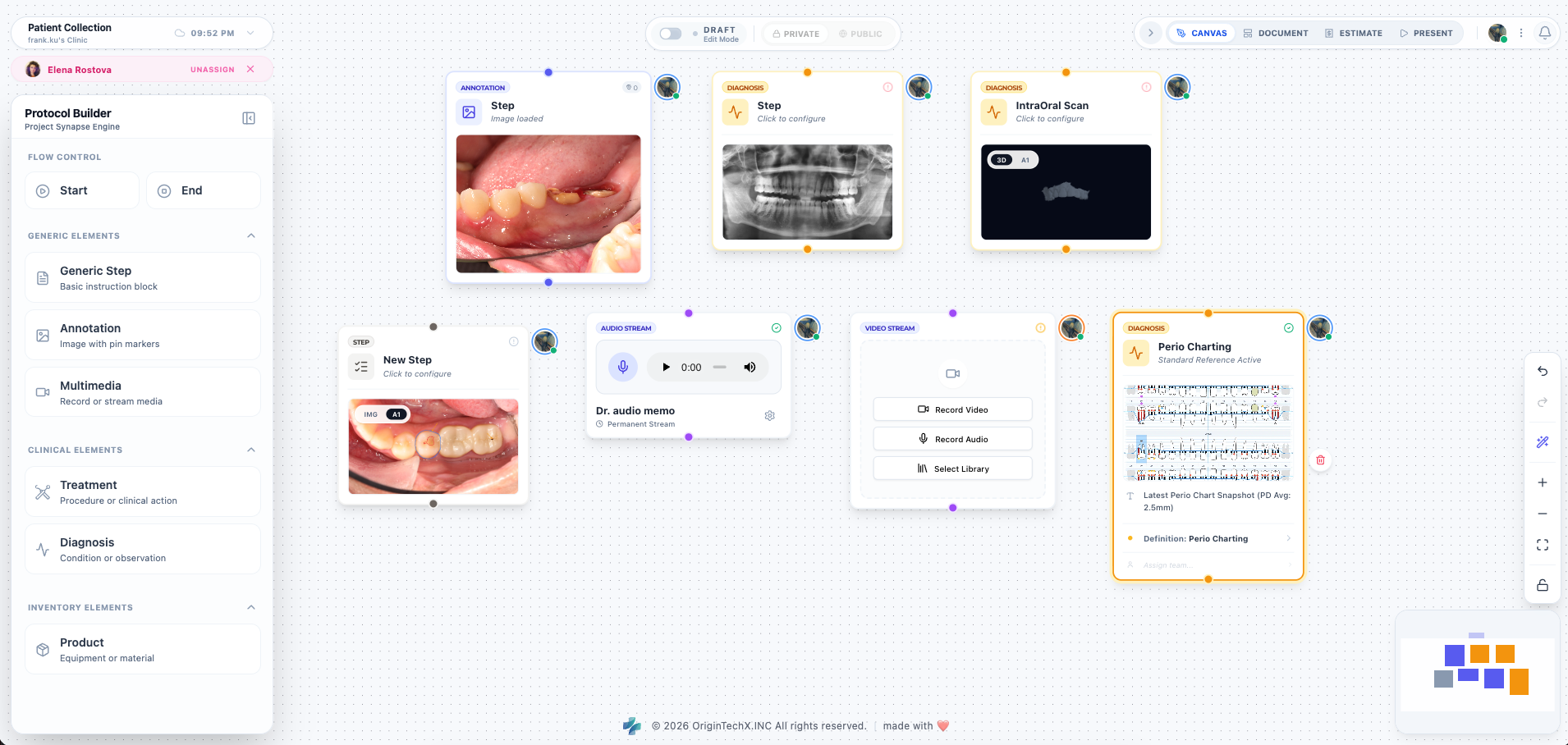
To turn this vision into reality, Solution Creator Studio centralizes previously isolated clinical records into structured, case-based training courses.
Inside a single, unified workspace, educators and clinicians can pull together the complete spectrum of multimodal clinical data:
- Radiographs: Diagnostic bitewings, periapicals, and panoramic views freed from proprietary software locks.
- Intraoral Photographs: High-definition photography capturing soft-tissue conditions and visual manifestations.
- 3D Digital Scans: Interactive PLY and STL digital models for hands-on anatomical review.
- Annotated Images: Direct clinical callouts, measurements, and marked areas of interest.
- Video & Audio Memos: Frontline records capturing patient behavior, non-verbal cues, and parental communication.
- Perio Charting: Probing depth recordings and full periodontal diagnostic maps.
- Periodontal Classification: Staging and grading criteria directly linked to supporting clinical evidence.
By standardizing these complex clinical records into modular training modules, we can finally bridge the gap between classroom theory and clinical intuition—giving the next generation of dentists a safe, comprehensive environment to practice gathering and interpreting patient information.
Conclusion: An Industry-Wide Challenge
While our discussion began in pediatric dentistry, this is an industry-wide reality. Across general practices and specialties alike, clinics struggle with the same core issue: fragmented patient data and static manuals that simply cannot bridge the clinical experience gap.
Real progress in dental technology isn’t about shaving minutes off chair-side time. It’s about capturing the complete clinical picture today so that frontline intuition and wisdom can be passed down to the next generation of caregivers.
Founder at OriginTechX
Pediatric Dental Specialist, Osaka Dental University 大阪歯科大学 小児歯科 日下 知